
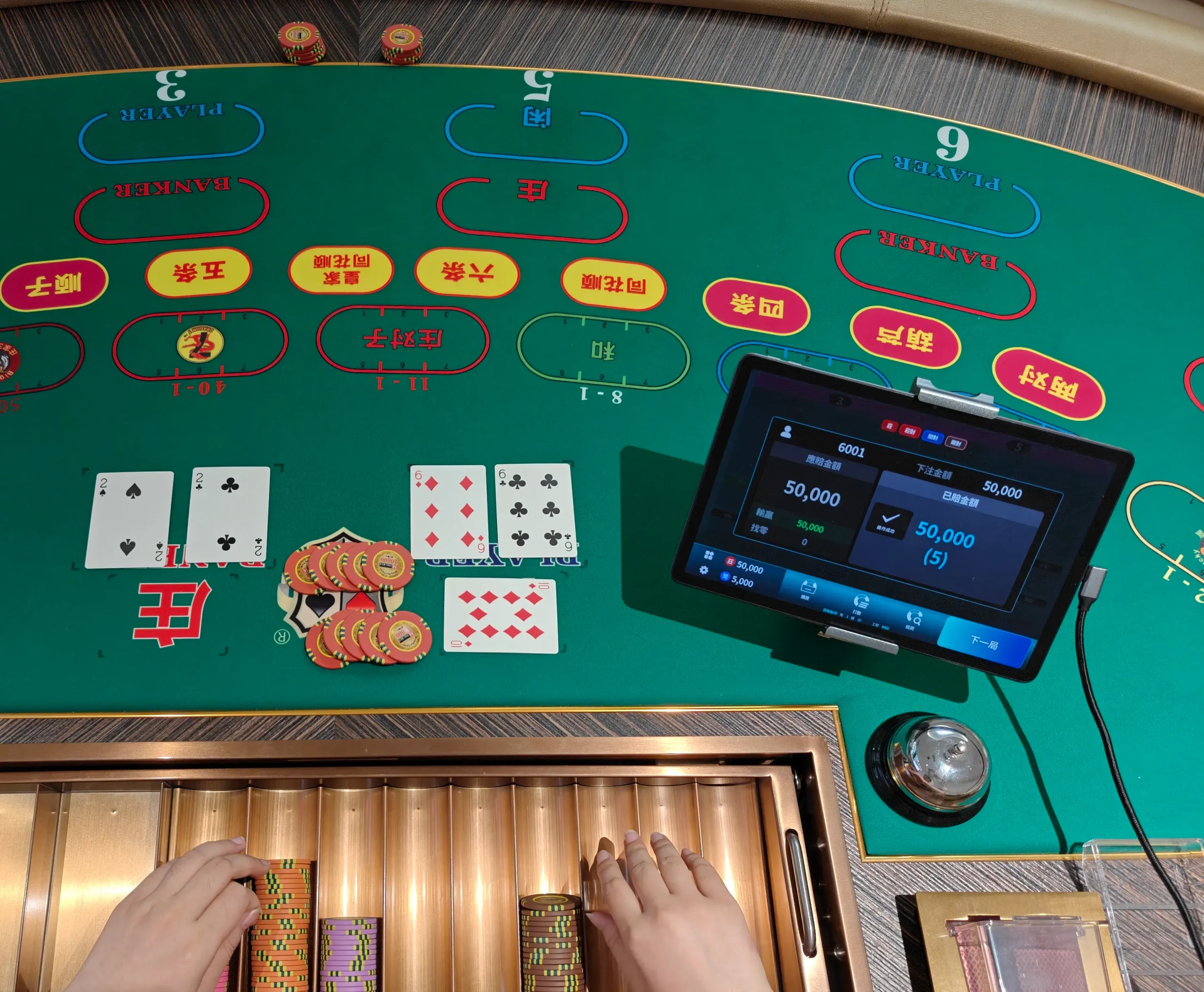
Off-the-shelf RFID casino tables meet the needs of many operators, but properties with distinctive floor layouts, specialized game offerings, or unique branding requirements often need customized solutions. Customization can range from minor aesthetic modifications to complete bespoke table designs with proprietary antenna layouts and specialized software integrations. The key to successful customization is understanding what can be safely customized without compromising the RFID system’s core performance, and what constraints must be respected to maintain regulatory approval and technical reliability.

What Can Be Customized on an RFID Table
The physical and functional components of an RFID table fall into three categories: cosmetic elements that have no impact on RFID performance, structural elements that require careful engineering to preserve performance, and electronic elements that must be designed by the manufacturer to maintain certification compliance.
Cosmetic Customization
The most straightforward customization layer involves visual and branding elements. These include:
– **Table felt design and color**: Custom felt printing with property logos, color schemes, or themed graphics is standard across the industry. The felt material must be RFID-transparent — meaning it does not attenuate the RFID signal — but most standard casino felt materials meet this requirement. The supplier should verify signal transparency for any custom felt material you propose.
– **Table rail and cabinetry finish**: Wood species, stain colors, upholstery materials, and trim details can all be customized to match the property’s interior design. These elements sit outside the RFID antenna field and do not affect performance.
– **Chip tray design and placement**: Chip tray locations can be repositioned within limits, provided the new location does not interfere with the antenna array or create signal shadowing from metal components in the tray structure.
– **Branding elements**: Inlaid logos, custom badging, and property-specific graphic elements can be incorporated into the table design without affecting RFID functionality.
Structural Customization
Structural modifications require engineering analysis to ensure that the RFID system continues to perform within specification. Common structural customizations include:
– **Table dimensions**: Expanding or contracting the table footprint changes the antenna array layout. Larger tables require additional antenna elements and potentially more powerful readers. Smaller tables may allow antenna consolidation but must still cover the full betting surface.
– **Player positions**: Changing the number of player positions or their spacing affects antenna density requirements. A table designed for seven players but reconfigured for nine requires antenna expansion to maintain read coverage at the additional positions.
– **Dealer position and layout**: Modifications to the dealer’s working area, chip rack placement, or card handling zone can affect antenna placement if these areas overlap with the betting surface.
– **Multi-game table configurations**: Tables designed to support multiple game types with reconfigurable layouts require flexible antenna designs that maintain coverage across all layout variants.
Electronic and Software Customization
The most complex customization layer involves modifications to the RFID hardware and software stack:
– **Antenna array density and layout**: Custom antenna designs are required when the table shape deviates significantly from standard configurations. Curved betting surfaces, irregular table shapes, and multi-level table designs all require bespoke antenna engineering.
– **Reader configuration and power settings**: Custom reader configurations may be needed to optimize performance for specific chip types, table materials, or interference environments.
– **Data output format and integration endpoints**: Custom software development may be required to format RFID data for proprietary casino management systems, to implement property-specific business rules, or to feed data into custom analytics platforms.
– **User interface customization**: Pit terminal displays, alert configurations, and reporting dashboards can often be customized to match property workflows and terminology click here.
The Customization Design Process
A structured design process prevents costly rework and ensures that customized tables perform as expected. The process typically follows these phases:
Phase 1: Requirements Definition
Document every customization requirement in detail. Include dimensional drawings, material specifications, color references, branding assets, and integration requirements. The more precise the requirements document, the fewer the misunderstandings during manufacturing.
For structural and electronic customizations, describe the performance requirements rather than prescribing a specific technical solution. For example, instead of specifying “add two additional antennas at positions X and Y,” describe the requirement as “maintain 99.5 percent read accuracy across the expanded betting surface that now extends 15 centimeters in each direction.”
Phase 2: Feasibility Analysis
The supplier’s engineering team evaluates the requirements against the constraints of their RFID platform. This analysis produces a feasibility report that identifies:
– Which customizations can be implemented within the existing product architecture
– Which customizations require new engineering and carry development costs and timeline extensions
– Which customizations conflict with regulatory approvals and would require fresh certification
– Risk factors that could affect performance, cost, or delivery timeline
Review the feasibility report carefully. A supplier that claims every customization is straightforward may be underestimating the technical challenges. A supplier that identifies specific risks and mitigation strategies is demonstrating engineering maturity.
Phase 3: Prototype Development
For significant customizations, the supplier should build a prototype table for evaluation before committing to a production order. The prototype allows you to verify:
– Physical fit and finish against your requirements
– RFID read performance across the customized table surface
– Integration behavior with your systems
– Staff usability of the customized layout
Prototyping typically adds four to eight weeks to the project timeline and carries a non-refundable development cost. This investment pays for itself by preventing expensive production errors.
Phase 4: Design Validation and Approval
Before production begins, the supplier should provide detailed production drawings, antenna layout diagrams, software specification documents, and a comprehensive test plan. Review these documents with your engineering and operations teams. Sign off on the production design only when you are satisfied that the customized tables will meet your requirements.
Balancing Customization with Standardization
Customization delivers differentiation and operational fit, but it also introduces risks and costs that standardized tables avoid. Before pursuing extensive customization, consider the following trade-offs:
Certification Impact
Customized tables may require fresh regulatory approval even if the base platform is already certified. The extent of re-certification depends on the scope of customization. Cosmetic changes rarely trigger re-certification. Structural changes that affect the antenna layout or electronic changes that modify the system behavior typically require at least a supplemental approval, if not a full re-certification.
Ask the supplier to assess the regulatory impact of your proposed customizations early in the design process. A customization that seems minor — moving a chip tray by ten centimeters — may require re-certification if the tray’s new location affects antenna performance characteristics that were part of the original certification testing.
Cost Implications
Customization costs include not only the incremental manufacturing cost but also engineering development, prototyping, testing, and potentially re-certification expenses. A customized table can cost 20 to 50 percent more than a standard model, depending on the scope of customization.
Request a detailed cost breakdown that separates standard table costs from customization costs. This breakdown helps you evaluate whether each customization delivers sufficient value to justify its cost. It also establishes a baseline for future reorders — customization costs are typically non-recurring, so second and subsequent orders should not carry the same development premium.
Maintenance and Support Complexity
Customized tables introduce variability into your table inventory. Spare parts for customized components may not be interchangeable with standard tables. Maintenance staff must be trained on the differences. Software updates may need to be customized for your specific configuration.
Discuss these implications with your maintenance team before finalizing customization decisions. A property with limited technical staff may be better served by standardizing on a smaller number of table configurations, even if that means compromising on some aesthetic or layout preferences.
Working with Suppliers on Custom Projects
Not all RFID table suppliers have equal customization capabilities Macaumr Casino Supplier. When evaluating suppliers for a custom project, assess:
– **In-house engineering capacity**: Does the supplier employ RF engineers, mechanical engineers, and software developers, or do they outsource customization work? In-house teams typically deliver faster and with better quality control.
– **Previous custom project experience**: Request case studies of similar customizations the supplier has delivered. Ask for references from those projects and contact them to discuss the supplier’s performance.
– **Design iteration process**: How does the supplier handle design changes during the project? A rigid supplier that cannot accommodate reasonable mid-project adjustments will be difficult to work with. A supplier that accepts every change request without assessing impact will blow your timeline and budget.
– **Documentation standards**: Custom projects generate a significant volume of design documentation — drawings, specifications, test reports, and integration guides. A supplier with strong documentation practices will deliver a complete package that supports long-term maintenance and future expansion.
Frequently Asked Questions
How much does it typically cost to customize an RFID casino table beyond the standard model price?
Customization costs vary widely based on scope. Minor cosmetic customizations such as custom felt printing or rail finish changes typically add 5 to 15 percent to the base table cost. Structural customizations that require modified antenna layouts or custom cabinetry can add 20 to 40 percent. Full bespoke designs with custom antenna engineering, proprietary software integration, and extensive prototyping can add 50 to 100 percent or more. Request a separate non-recurring engineering (NRE) quote for development work, and a per-unit price for the customized tables themselves, so you can evaluate the cost structure clearly.
Will customizing my RFID tables void their gaming certification or require re-certification?
This depends on the nature and extent of the customization. Cosmetic changes that do not affect the RFID system’s electronic performance or physical configuration typically do not require re-certification. Structural or electronic changes that modify the antenna layout, reader configuration, or system behavior will likely require at least a supplemental approval from the relevant gaming control board. In some cases, a full re-certification may be required. Your supplier should provide a regulatory impact assessment as part of the feasibility analysis, and you should budget four to twelve weeks for re-certification if it is required.
Can I customize tables from one supplier to work with chips from a different manufacturer?
This is technically possible but requires careful engineering and testing. The RFID antennas and readers must be tuned to the specific RFID tag characteristics of the chips you intend to use. If you change chip suppliers after the tables are built, the read performance may degrade or fail entirely. If you know you want to use a specific chip manufacturer, specify this requirement upfront so the supplier can optimize the antenna design accordingly. Changing chip suppliers after deployment is strongly discouraged and may require hardware modifications to the tables.
How long does a custom RFID table project typically take from initial design to delivery?
A typical custom project timeline ranges from sixteen to thirty-two weeks. The breakdown is approximately: requirements definition (2 to 4 weeks), feasibility analysis and engineering (4 to 8 weeks), prototyping and validation (4 to 8 weeks), regulatory approval if required (4 to 12 weeks), and production and delivery (6 to 12 weeks). Rush projects are possible but increase the risk of errors and may incur expedite fees. Build a realistic timeline into your project plan and avoid compressing the schedule unless absolutely necessary.
What should I include in the customization contract to protect my investment?
Key contract provisions for custom projects include: clear acceptance criteria tied to measurable performance metrics (read accuracy, integration functionality, physical dimensions), milestone-based payment schedules that retain meaningful leverage until final acceptance, intellectual property clauses that specify your ownership of custom designs and integration code, confidentiality provisions that prevent the supplier from reusing your customizations for other clients, and warranty terms that specifically cover the customized elements. Require the supplier to provide a complete set of design documentation, test reports, and integration guides upon project completion.