
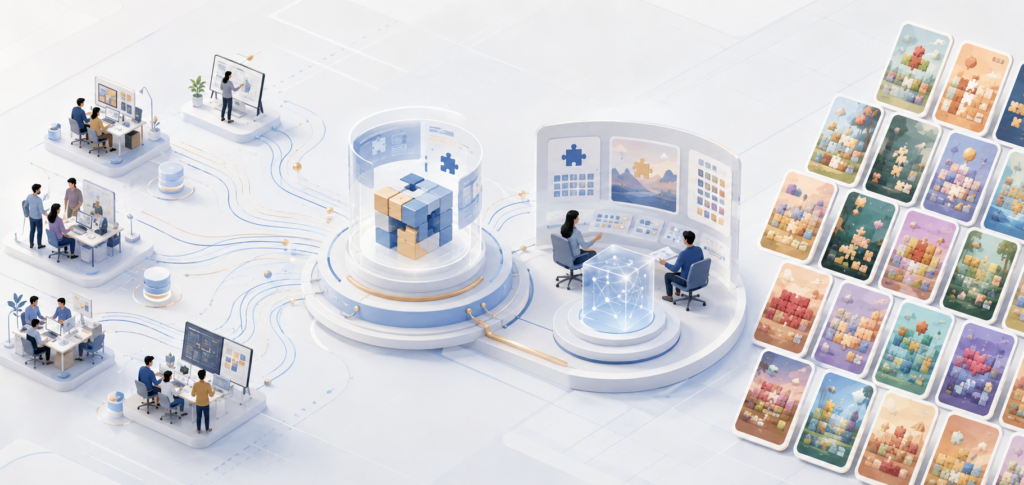
Developers and studios collaborate through a unified production system to deliver content at scale.
The team has established stable workflows for spot-the-difference, coloring, hidden-object, jigsaw and word games. Project management, human–AI collaboration, proprietary tools and standardized production lines support concurrent projects and flexible scaling. To date, GLTOP Content Workshop has produced over 20,000 content pieces.
Project-Based Teams: Turning Talent into Production Capacity
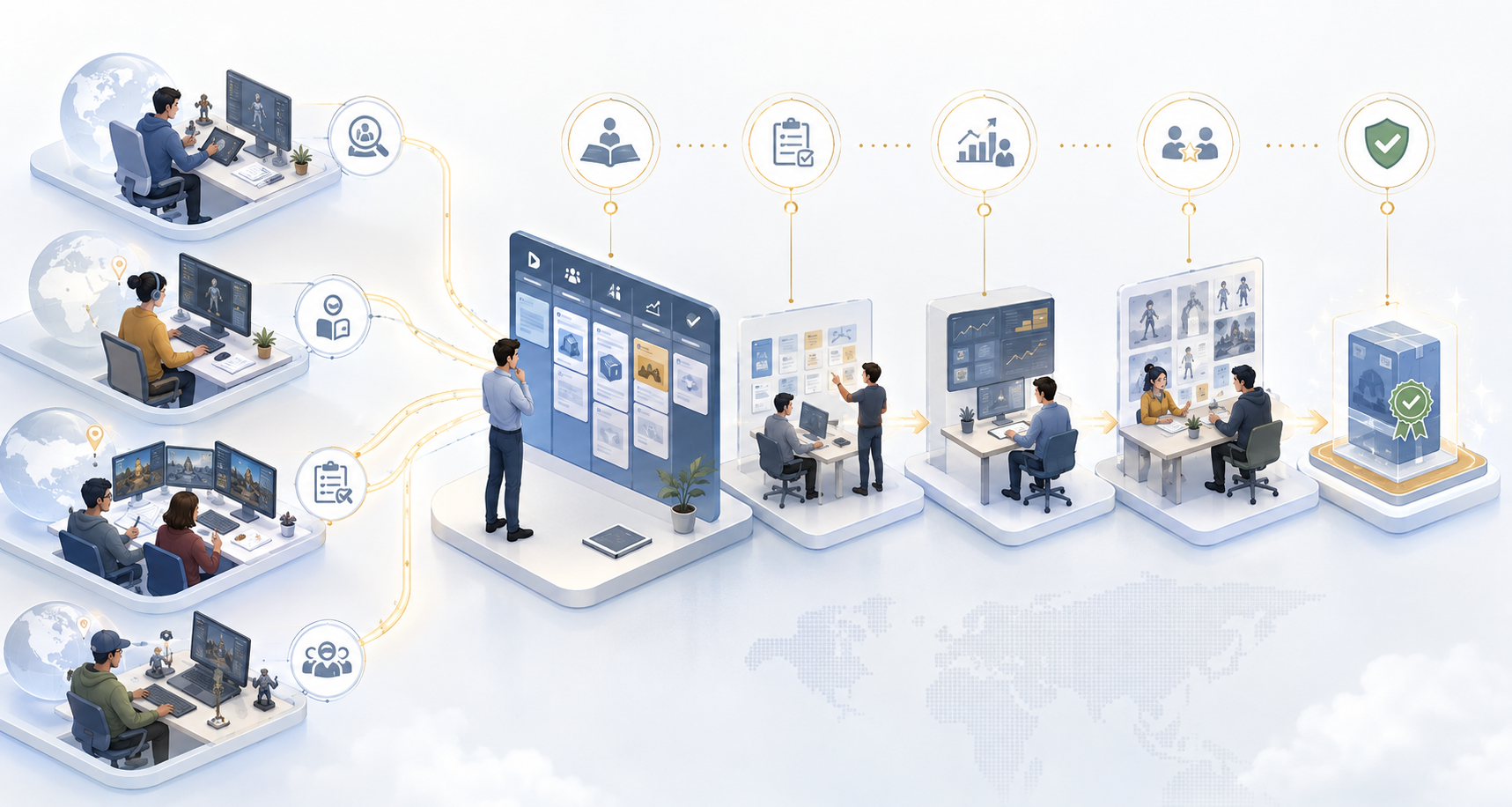
From team organization to acceptance checks, project management turns distributed resources into manageable production capacity.
GLTOP Club not only connects developers and specialist studios, but also organizes production around clear project objectives. Based on genre, art style, task volume and delivery schedule, the team recruits and screens contributors, trains them in standards, breaks down tasks, manages progress and conducts staged and final reviews, enabling distributed teams to work to consistent standards.
Each project has a designated lead responsible for requirements, scheduling and delivery. Work is divided into actionable, verifiable stages, with results reviewed before moving forward. Deviations are traced and corrected promptly to keep progress and quality manageable across people and batches.
Human–AI Collaboration: Efficiency with Content Quality
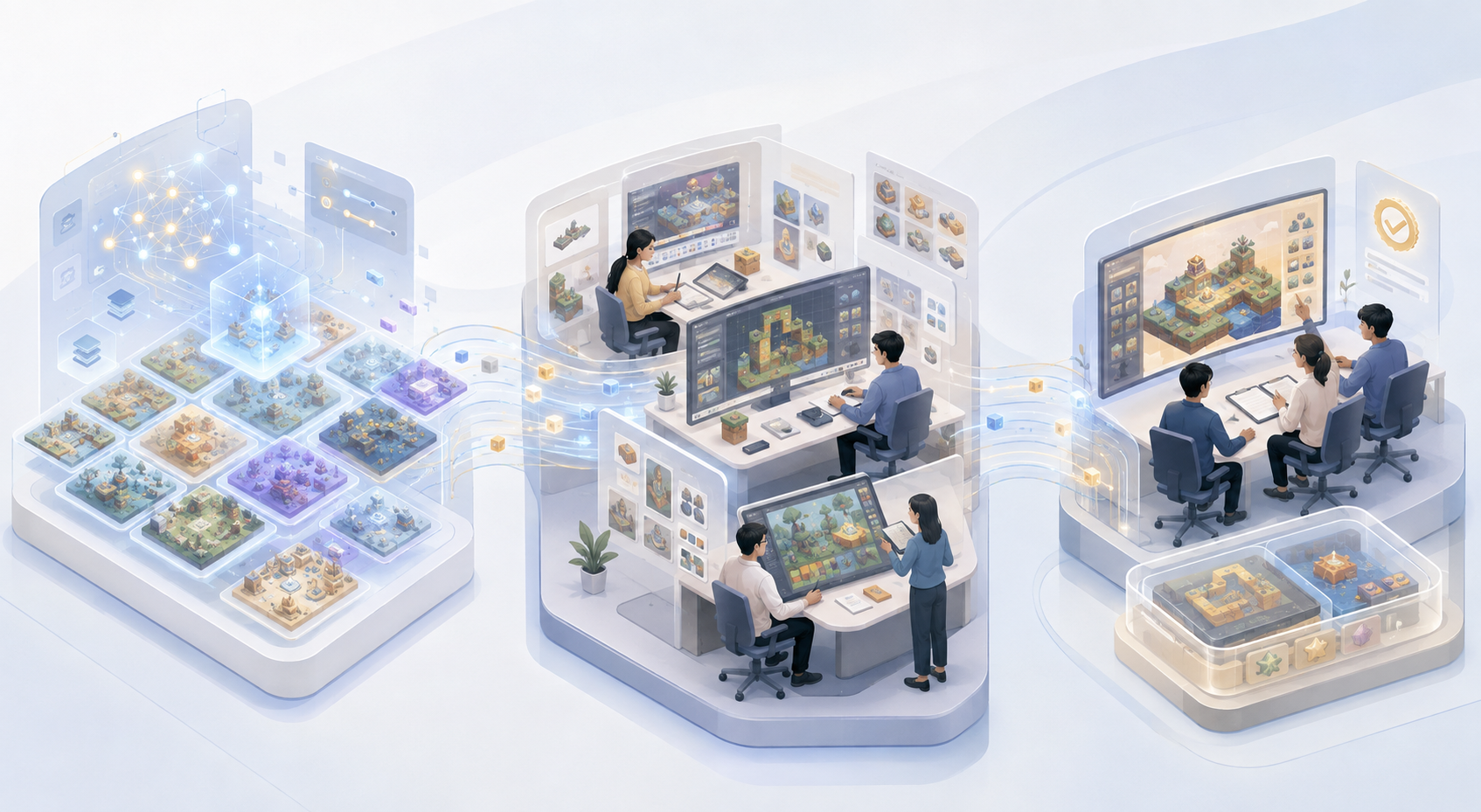
Generative AI, professionals and production tools each play a role in balancing output and quality.
In large-scale production, generative AI and proprietary tools primarily handle batch drafts, exploration, repetitive processing and automated checks. Designers, artists and level designers set creative standards, define rules, refine work manually and conduct final reviews.
The toolchain connects generation, manual processing, quality checks and export, allowing people to focus more on creative judgment and quality while reducing repetitive work. Human–AI collaboration is not simply a replacement for people: it lets different roles contribute their strengths within a shared workflow.
Multiple Genres: From Specifications to Deliverable Levels
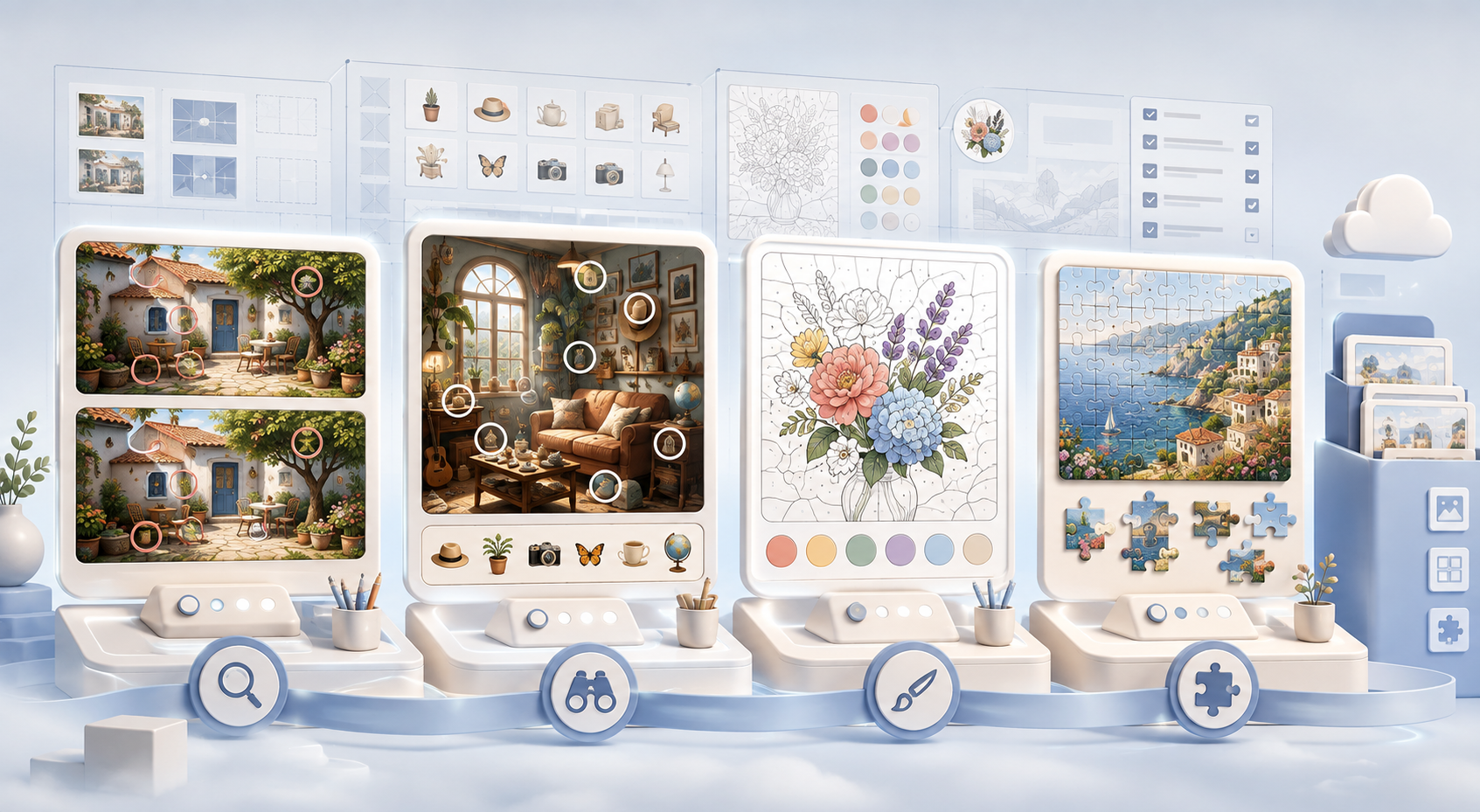
A shared production system supports spot-the-difference, hidden-object, coloring, jigsaw and other content.
For each puzzle genre, client requirements are translated into production specifications and acceptance criteria. Spot-the-difference projects cover scene artwork, difference design, variations and level-image output; hidden-object projects cover scenes, object placement and target design; coloring projects cover theme expansion, object separation and batch artwork; jigsaw and other projects follow slicing, packaging and format requirements for production and validation.
A typical workflow is: requirements and rules → sample validation → batch production → manual refinement → quality acceptance → standardized delivery. Production can scale with release schedules while maintaining consistent acceptance standards across concurrent projects.
Style & Quality: Consistency Across Batches
The team continually develops style configurations, reference examples and consistency standards for common casual-puzzle visual directions. Once a client approves a style benchmark, contributors work to shared specifications, supported by spot checks, final human review and pre-delivery validation to control variation across people and batches.
Level-content checks cover not only visual quality, but also gameplay rules, duplication, file specifications, naming and asset completeness, reducing rework caused by inconsistent standards.
20,000+ Content Pieces: Asset Management for Parallel Delivery
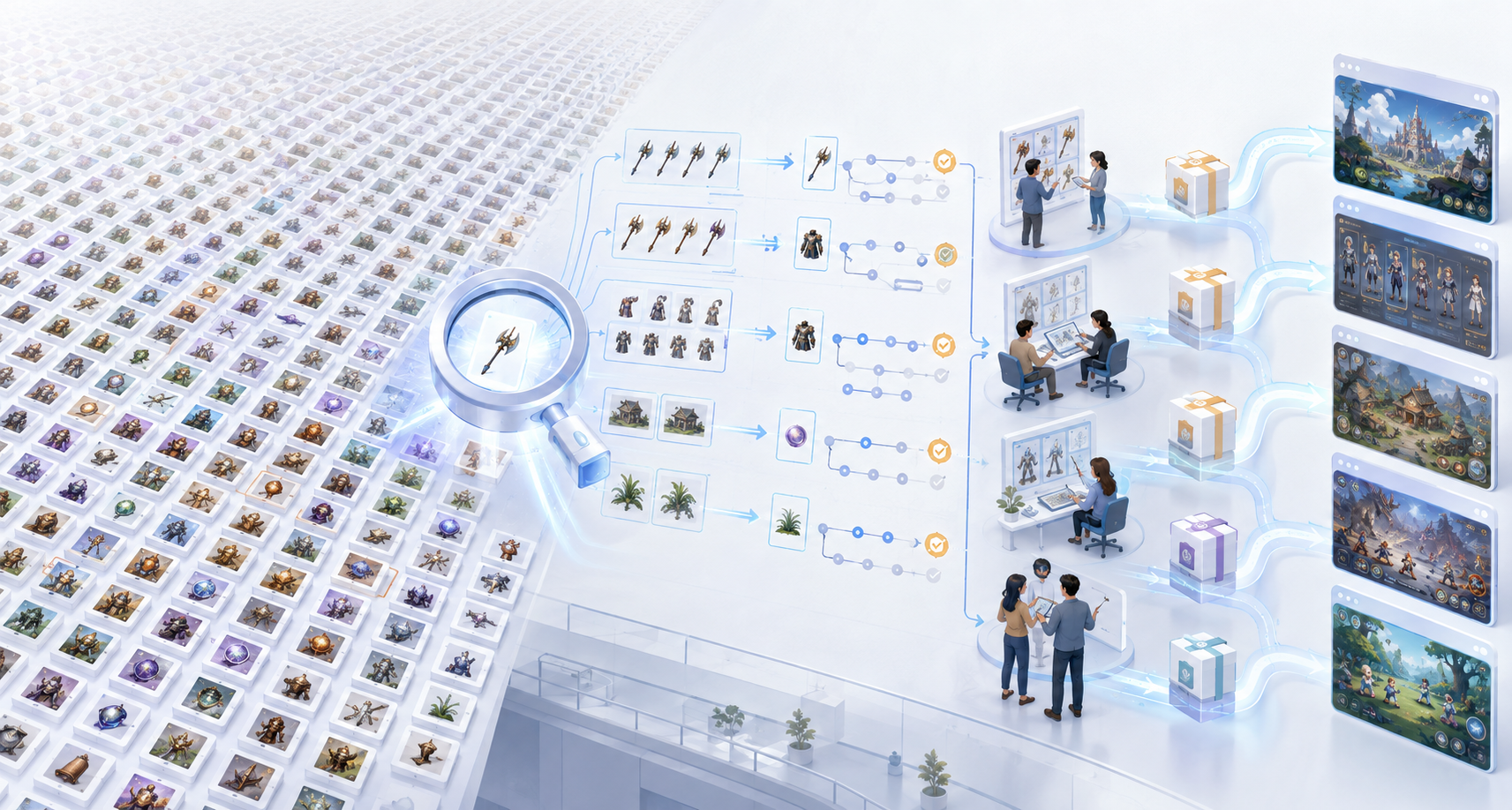
Search, duplicate checks, tracking and quality reviews support asset management and delivery across more than 20,000 content pieces.
Across its growing portfolio, GLTOP Content Workshop has produced more than 20,000 deliverables, including level content, art and animation assets.
To support collaboration across people, stages and projects, the team has established asset search, similarity management, version history and delivery tracking. Existing content can be retrieved and compared during production to reduce duplication and support reuse, version management and quality traceability.
Continuously Expanding Puzzle-Game Content
Puzzle games need a steady stream of levels to sustain updates and enrich the player experience. Through project-based organization, human–AI collaboration and standardized production, GLTOP Content Workshop turns distributed talent, technology and tools into sustainable delivery capacity, helping partners expand libraries faster, manage repetitive production costs and accelerate iteration.
The team will continue improving cross-genre workflows, quality standards and asset management, while exploring more efficient collaboration with game-development and publishing teams.
Partnership Enquiries: business@gltop.com
Production figures are based on completed-project statistics. Genre suitability, delivery schedules and commercial terms are subject to project assessment and materials confirmed by both parties.